Imagine being a Republican and voting against a recissions package of a mere $9 billion – money that is literally a drop in the bucket compared to our vast multi-trillion-dollar deficits and towering $37 trillion in debt. And yet – there were Senators Lisa Murkowski, Mitch McConnell and Susan Collins willing to throw themselves in front of the bus to prevent even that paltry spending cut going through.
It’s astonishing, and embarrassing. But these three hate Donald Trump so much they will oppose anything he and his colleagues propose.
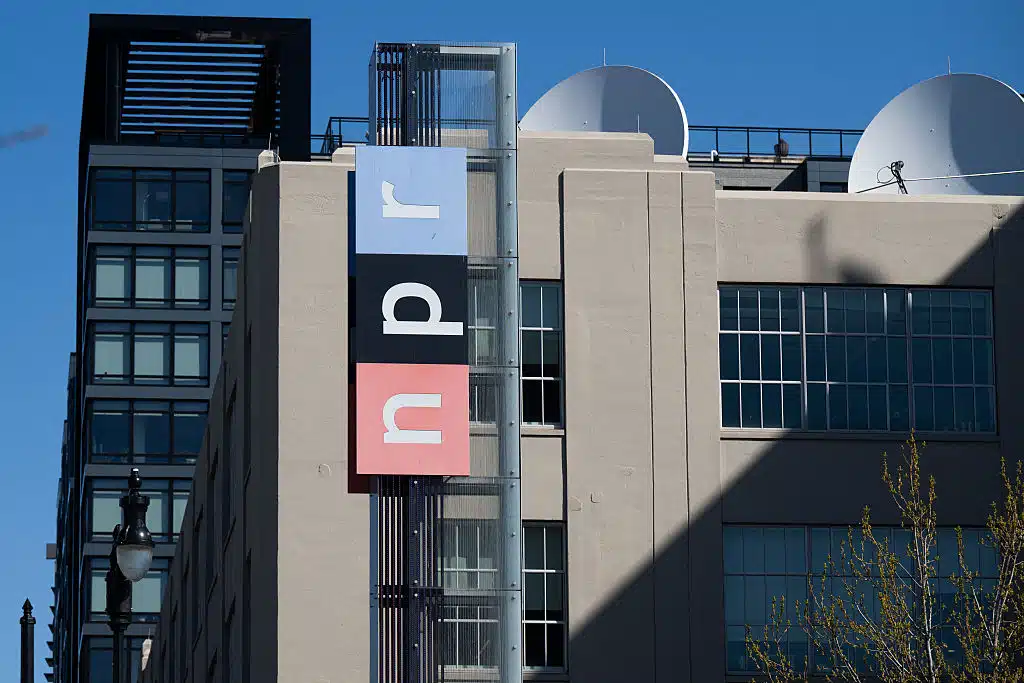
What in particular are the three spendthrifts fighting to preserve? Mainly, it appears, $1.1 billion meant to support the Corporation for Public Broadcasting which, in turn, directs funds to National Public Radio and the Public Broadcasting Service.
Anyone who tunes into NPR on a regular basis knows it is incredibly left-leaning and anti-Trump; since a majority of the country voted for Donald Trump, why should that same majority fund the incessant anti-Trump reporting that flows unimpeded from nationalized radio? GOP legislators think that’s wrong, and they are correct.
Lisa Murkowski defended her position saying, “If you think there’s too much bias at NPR, let’s address that. But you don’t need to gut the entire Corporation for Public Broadcasting.”
Here’s the thing: the bias has existed (and been lamented) for decades and it has not been addressed. If Murkowski and her colleagues care about the organization, why haven’t they done something to make it more palatable to half the country?
An opinion writer for the NY Times is out today with an editorial in support of public media, lamenting the decline of local journalism, writing: “The number of local journalists has declined by 75 percent since 2002, and a third of American counties don’t have a single full-time local journalist, a study last week found.”
He argues that, “Public media offers a bulwark against that trend. NPR and PBS member stations focus on local and state issues. They broadcast local government meetings. They cover local courts and public transit. They alert people of events in their communities that no one else would tell them about otherwise.”
I wonder. Historically, local news is the meat and potatoes of small-town newspapers; actually, because of that focus, many are doing quite well. The NYT author warns, “Nearly one in five NPR member stations could close down without federal funding, one analysis found.” That “analysis” was actually organized by NPR, and is from 2011, way before social media changed everything about news reporting.
The Times, in an editorial board piece today, reports that actually, “Only about 2 percent of [NPR’s budget] comes directly from the federal government”, so that operation will be just fine.
Here’s the reality: if the public is desperate for the programs broadcast by NPR and PBS, they will pay for them. Everyone dredges up Big Bird as some sacred cow (or bird}; surely if families across the U.S. want Sesame Street in their living rooms, large corporations will fund the program, or advertisers will line up to keep it on air. Another NYT writer concluded: “NPR can weather the funding cut… thanks in part to aggrieved listeners: Executives predict a sudden boom in donations if Congress defunds it, as listeners rush to defend their favorite programs.” Works for me!
The Times also objects to cutting funds for Voice of America, which, it says, in “some” places “is the only source of news that is not hostile to the United States or democracy.” The Times chooses its words carefully; “not hostile” is about as good as it gets, since you could not describe VOA reporting as pro-America. I remember writing a piece several years ago about VOA; writers there were complaining that they were being nudged by the Trump administration to adopt a pro-US stance. That they balked, citing the need for editorial independence, is all you need to know.
