*This article originally appeared on TheHill.com*
“A failure of imagination.”
That was the phrase with which the 9/11 commissioners explained the 2001 terrorist attacks. The U.S., they wrote, was unprepared for jihadists flying planes into the World Trade towers because we simply could not imagine such hatred directed toward innocent people.
Today, Democrats running cities and states are the ones lacking in imagination, and to their own detriment. Places like California and Illinois are losing residents and businesses, watching their political clout shrink as they lose seats in Congress and electoral votes in future presidential races. Their failure of imagination consists in an inability to see how they might change course.
Democrats have one playbook: Raise taxes and fund programs aimed at winning votes from constituent groups (Black and Hispanic voters, for example), and to placate political allies like the teachers’ unions. So dedicated are they to this playbook that they raise taxes to the point of incurring negative returns — as wealth taxes especially tend to do.
Democrat legislators and governors apparently cannot imagine trying to attract people and businesses, as opposed to driving them away.
New York provides an excellent case study. Consider, for a moment, what might happen if New York were to lower taxes. First, it would stop the bleeding. “New York’s population is still down a net 201,269 from the 2020 Census count,” City Journal reports — “the biggest population decline of any state.”
Second, lower taxes might bring back people who have fled the Big Apple. Spend time in Palm Beach and you will hear quite a few newly transplanted New Yorkers’ wistful nostalgia for their city.
Yes, the quality of life in sunny, orderly Palm Beach is lovely, and the city is blessedly free of the stench of marijuana that pervades New York. Iconic Manhattan restaurants like Milos and Bilboquet have opened new Palm Beach locations. The roads are not pitted with holes big enough to break an axle, and CVS does not keep its products under lock and key to foil thieves.
But Palm Beach does not have Broadway, the Metropolitan Museum, Central Park or a gazillion other beloved attractions. Most importantly, Palm Beach does not have the families left behind in New York. Their kids come to visit, sure, but it’s not the same as taking the grandchildren to school in the morning.
Given the right incentives, many New Yorkers in Florida might move back. That would mean more people shopping and paying the also-high sales taxes; more people supporting Broadway and the Michelin-starred restaurants Manhattan still attracts; more people paying taxi drivers, cleaning staff, delivery people and all the other lower-income folks that Democrats pretend to care about.
Currently, New York refugees must count the days they spend in the city; more than 183 and they become subject to Albany’s taxes. They parse their travel, aware even that flying through JFK can count as a day in the Big Apple. Many have sold their homes in New York just to prove to tax auditors they have actually moved.
Why do people go through all this? To save not only on state income taxes — currently among the highest in the U.S. — but also on estate taxes. New York State’s income tax on top earners (making more than $25 million per year) is 10.9 percent; for mere millionaires it is 9.65 percent. The city of New York adds another 3.9 percent income tax to those in the highest income strata.
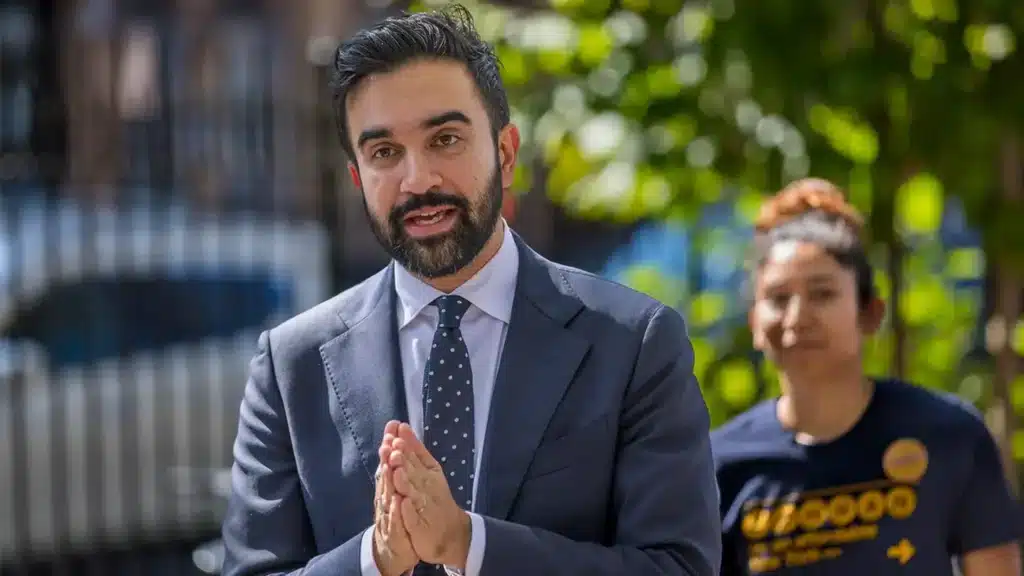
New York Mayor Zohran Mamdani wants to raise taxes even more. The state is putting money toward his wish-list programs, and Wall Street is bringing in more revenues than expected. He has claimed the city faces a “budget crisis” that can only be fixed through tax hikes. But that is not true.
Raising the top rate to 5.8 percent would leave high earners paying a 16.76 percent combined city and state levy, in addition to a federal rate of 37 percent. Our highest achievers would thus be paying well over half their income — 53.8 percent — to the government. For many, that is just too much.
In Florida, for those keeping track, there is no income tax. There is also zero estate tax, whereas the estate tax in New York goes as high as 16 percent once your estate reaches a certain threshold. For many wealthy people, the estate levy is another push out the Empire State door.
The flight of New Yorkers refusing to pay such lofty levies has shrunk city and state revenues and led to ever-higher taxes, in a vicious circle of disaster. When he was mayor of New York City, Mike Bloomberg would fend off leftist calls for higher taxes by pointing out that a very small number of families were contributing a high percentage of the city’s revenues, and that the city could not afford to lose them. He was right. The city’s top 1 percent — comprising those who earn at least $900,000 annually — account for roughly 40 percent of the city’s annual $18 billion in income tax revenue.
Why don’t Democrats, faced with dire long-term declines in blue-state populations, House seats and even electoral votes, change course? Because that would be an admission that they are wrong about how to provide the maximum benefits to their constituencies.
A growing economy means more money to fund welfare programs. Attracting rich people helps, not hurts, the needy. It’s not rocket science — it just takes a little imagination.